

How to Protect Your Home and Business Online from Cyberattacks

Cyberattacks are on the rise. Consider these statistics:
- In 2024, global ransomware attacks increased by 15%, with the industrial industry accounting for 27% of these attacks.
- 2024 saw the highest volume of ransomware attacks since 2021, with a staggering 5,263 attacks
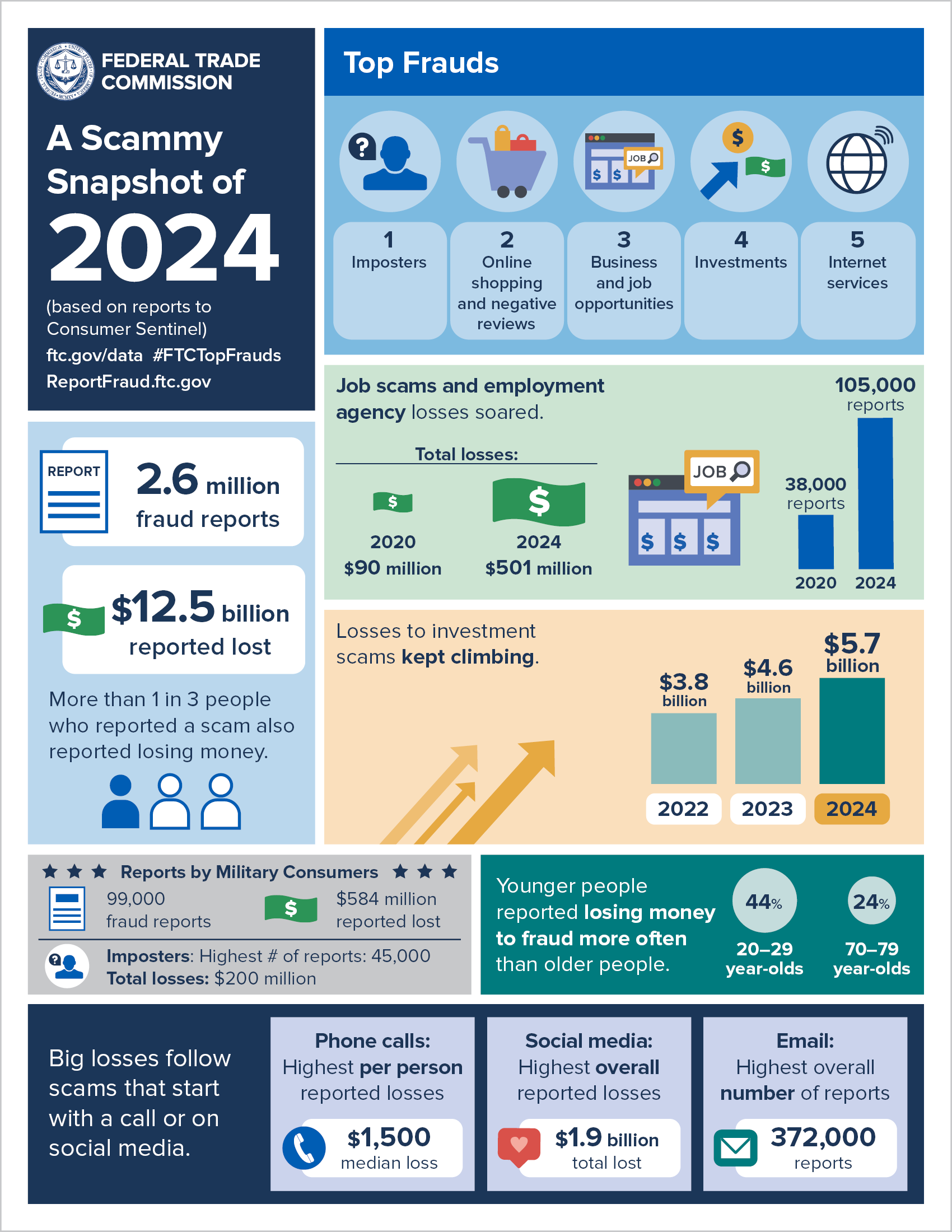
- Individuals are also at risk, with a 25% increase in fraud reported to the Federal Trade Commission in 2024, totaling over $12.5 billion in losses. Consumers reported losing more money to investment scams—$5.7 billion—than any other category in 2024.
These statistics highlight the urgent need for online protection for both homes and businesses.
Source: Federal Trade Commission
Protect Yourself: A Four-Step Process
Protecting your digital assets is not a one-time task but an ongoing process. This process can be broken down into four key steps:
- Identify: The first step is to identify your valuable assets and potential vulnerabilities. This includes sensitive data, financial information, and any systems connected to the internet.
- Protect: Once you know what to protect, implement safeguards. Strong passwords, encryption, MFA, and updated software are essential.
- Detect: Even with strong defenses, breaches can occur. Implement monitoring systems to detect suspicious activity quickly.
- Respond: Have a plan in place to respond to a cyberattack. This includes isolating affected systems, contacting authorities, and restoring data from backups.
Identify Important Digital Information
Knowing what exactly hackers are after is the initial step to protect it. Take an inventory of your digital assets, including:
- Sensitive Data: This includes personal information like Social Security numbers, bank account details, and medical records.
- Financial Information: This includes credit card numbers, investment accounts, and tax documents.
- Connected Devices: Any device that connects to the internet, such as computers, smartphones, and smart home devices, can be a potential entry point for cybercriminals.
[TIP: Create a data map to visualize your assets and their locations.]
Protect Your Online Data
Once you know what to protect, you can start implementing safeguards. Some essential protective measures include:
- Strong Passwords: Use unique, complex passwords for all of your accounts and enable multi-factor authentication whenever possible.
[TIP: Use a password manager to keep track of your passwords.] - Encryption: Encrypt sensitive data both at rest and in transit.
- Software Updates: Keep your operating systems, applications, and antivirus software up to date to patch security vulnerabilities.
- Firewall: A firewall acts as a barrier between your computer and the internet, blocking unauthorized access.
[TIP: Ensure your firewall is always turned on.] - Secure Wi-Fi: Use a strong password for your Wi-Fi network and encrypt it with WPA2 or WPA3.
Detect Suspicious Activity
Even with strong defenses, it’s possible for cybercriminals to breach your systems. Early detection is crucial for minimizing damage. Consider implementing:
- Antivirus and Anti-Malware Software: These tools can scan your computer for malicious software and remove it.
[TIP: Schedule regular scans and keep your antivirus software updated.] - Intrusion Detection Systems (IDS): An IDS monitors network traffic for suspicious activity and alerts you to potential threats.
- Security Information and Event Management (SIEM) Systems: A SIEM system collects and analyzes security data from various sources to identify and respond to threats.
Respond to an Incident
Even with the best prevention and detection measures, a cyberattack can still happen. Having a response plan in place can help you minimize damage and recover quickly. Your plan should include:
- Incident Response Team: Identify key personnel who will be responsible for responding to a cyberattack.
- Communication Plan: Establish procedures for communicating with stakeholders during and after an attack.
- Data Backup and Recovery: Regularly back up your data and have a plan for restoring it in the event of an attack.
- Legal and Regulatory Requirements: Understand the legal and regulatory requirements that apply to your organization in the event of a data breach.
[TIP: Practice your response plan regularly to ensure everyone knows their roles and responsibilities.]
Staying Ahead of the Game
Cybercriminals are constantly evolving their tactics. Stay informed about the latest threats and adapt your defenses accordingly. Consider using security software and staying updated on security best practices.
Remember, online security is an ongoing process. By following these steps and remaining vigilant, you can significantly reduce the risk of falling victim to cybercrime.
For more information and awareness training, contact Cyber Solutions Technologies today.
Photo by Towfiqu barbhuiya on Unsplash